Psychology students receive top awards at Hayes, Denman research events

Department of Psychology students received top awards at Ohio State research showcases this spring.
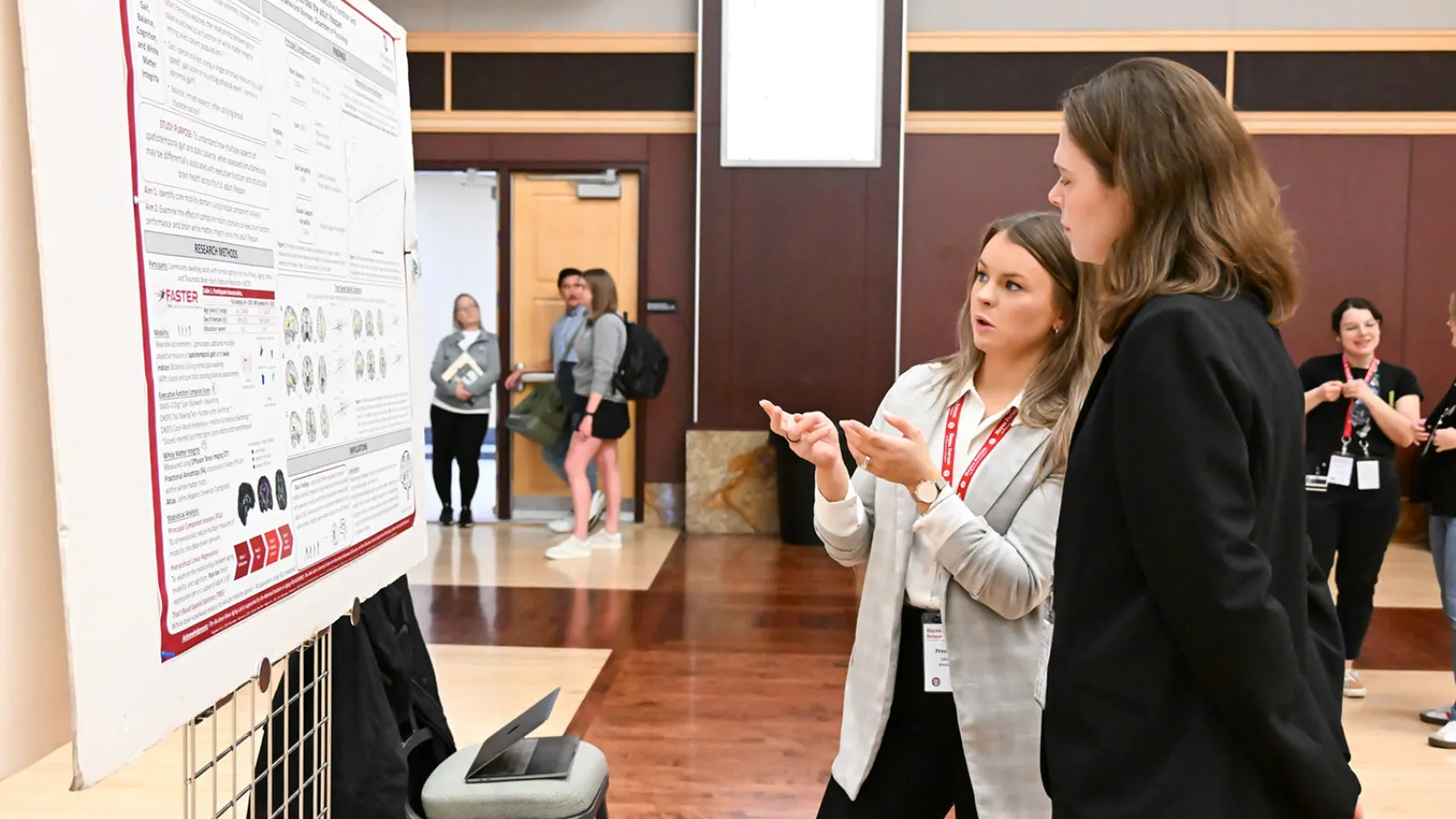
Grace Amadon and Olivia Horn, both clinical psychology graduate students, received first and second place, respectively, for their poster presentations at the Hayes Research Forum on March 6. Eunjee Ko, a graduate student in social psychology, also received an honorable mention for her talk.
At the Denman Undergraduate Research Forum on March 10, psychology majors Alison Gruber and Jasmine Freeman received first and second place for their poster presentations, respectively.
It was the first year the students had participated in the events, both of which highlight research excellence across fields and give presenters valuable experience discussing their work with public audiences. While the Hayes Forum features research by graduate students, the Denman Forum highlights work by graduating undergraduate researchers.
“Presenting research to a broad audience is a crucial skill that is often best learned outside the classroom,” said Duane Wegener, chair of the Department of Psychology.
“This makes experience at a forum like the Denman or the Hayes extremely important. I am gratified to see our students not only participating but excelling!”
During the Hayes Forum Social and Behavioral Sciences poster session, Amadon and Horn shared their research on physical activity and brain health. Both students are part of Associate Professor Scott Hayes’s Buckeye Brain Aging Lab (B-BAL).
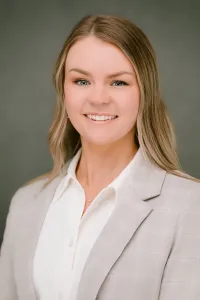
Amadon’s work looked at how people’s movements relate to brain and cognitive health with age. She studied links between cognitive abilities and walking and balance, she explained. She also used magnetic resonance imaging (MRI) to look at the health of her subjects’ white matter—the neuronal “wiring” of the brain that facilitates communication between its different regions.
Amadon found that in adults 65 years and older, walking traits like speed, steps per minute and stability were tied to someone's level of executive function—for example, their ability to make decisions and focus on tasks. How someone walked also related to the integrity of their brain communication pathways.
“Taken together, this work highlights how assessments of the ways individuals move may serve as accessible markers of brain health in aging,” Amadon said.
White matter health was also a focus of Horn’s research, which looked at the impact of living in economically disadvantaged neighborhoods on people’s memory and brain structure. Additionally, she studied whether physical activity can counteract negative effects of residing in these areas. Horn found that the more disadvantaged a neighborhood a person lived in, the worse their memory and the less healthy their brain’s white matter. Physical activity appeared not to provide any protection.
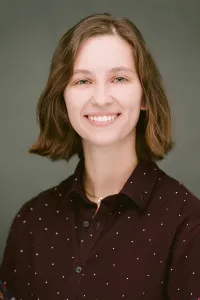
“Our results highlight the importance of considering environmental factors when developing public health strategies aimed at supporting cognitive health as people age,” Horn said.
Hayes, Horn’s and Amadon’s advisor, said he was proud not only of his students’ research, but their support for each other throughout the process.
“I feel lucky to have such excellent people working with me,” he said.
“Graduate school is tough, and effort doesn’t always result in a grant, publication, or an award, so I am always thrilled when a lab member receives recognition.”
At the Denman Undergraduate Research Forum, both Freeman and Gruber presented in the Civil Discourse for Citizenship category. Freeman’s research looked at the effects of political polarization among members of a hypothetical jury. When considering a case related to abortion, the jury members tended to side with the person whose ideology aligned with theirs, regardless of eyewitness evidence.

Gruber’s work, on the other hand, looked at the reasons behind the Continued Influence Effect of misinformation, or people’s tendency to continue believing false and misleading information after it has been flagged as incorrect. She found that how uncomfortable someone felt with a correction affected how much they continued to believe the misleading claim. The source—such as a news outlet or expert—did not play as much of a role as expected.
Gruber will also present her findings, which are part of her thesis, at the Psychology Undergraduate Research Colloquium on April 20. She explained that getting some practice at the Denman forum helped her feel more prepared.
“I also was able to see my peers present the research they have been working on alongside me for the last year, which was super cool!” Gruber said.
Horn and Amadon likewise found the Hayes Forum to be a valuable experience that connected them with peers and taught them about the wide range of innovative research occurring at Ohio State.
“I was able to learn more about topics closely related to my interests, like healthcare disparities in older adults, as well as areas that were completely new to me, like soybean growth,” Horn said.