
Doctoral student receives grant for research on head trauma and Alzheimer’s Disease

Erica Howard, a doctoral candidate in the Department of Psychology’s clinical psychology graduate program, has received the Brain Injury Association of America’s Dissertation Grant.

A fifth-year graduate student specializing in neuropsychology, she will use the $5,000 BIAA award to complete her dissertation research on head trauma and chronic changes linked to the neurodegenerative condition Alzheimer’s Disease.
“I am extremely honored to have received this award and greatly appreciate the BIAA’s support of this project,” said Howard, who works in the MINDSET Lab with her advisor, Scarlet and Gray Associate Professor Jasmeet Hayes.
Howard’s research focuses on two key changes in people’s brains: the loss of myelin—the protective outer coating of neurons—and the abnormal accumulation amyloid-beta and tau proteins in brain tissue. While these changes are often associated with head trauma and Alzheimer’s Disease on their own, she is looking to see whether they could also work together to cause disease in the years following brain injury.
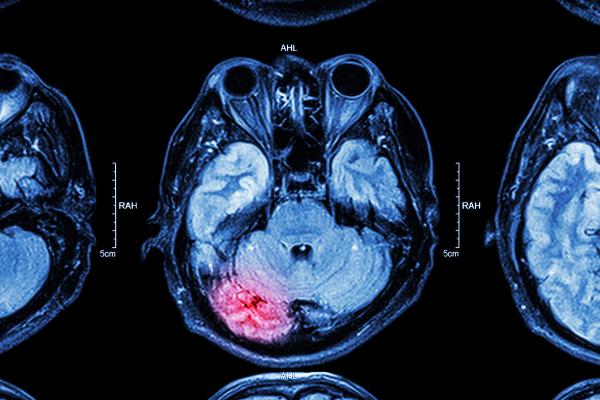
To do so, Howard is using a new magnetic resonance imaging (MRI) technique that allows her to measure myelin levels at the surface of the brain, rather than deeper in the tissue, where it is generally studied. She is also evaluating this data alongside blood indicators and cognitive test results.
“There is ongoing concern about the effects of repetitive head impacts, such as those common in sports—however, it is unclear who is most likely to experience brain changes,” said Hayes, who herself recently received an NIH grant to study biological predictors of neurodegeneration following concussion.
“Erica’s research directly addresses this important question, and this prestigious award from the Brain Injury Association of America recognizes the significance of her work.”
Howard said her work builds on a longstanding personal interest in head injury, as well as neurodegenerative research she began before her graduate program at Ohio State. She plans to defend her dissertation in the summer of 2026.